Using Building Data for Digital Processes, Prevention, and Early Risk Detection – ex:guard
Capture building data. Avoid risks. Prevent damage and handle claims more quickly.
ex:guard is EXCON’s modular solution for structured building data, risk prevention, and more efficient claims processes. Whether on-site, via video, or as an action plan: With ex:guard onsite, ex:guard remote, and ex:guard prevent, insurance companies, banks, and real estate firms gain a comprehensive database to identify building risks earlier, reduce existing risks, and determine the next steps based on sound information.

From the House Check to an Intelligent Building Database
For a long time, the EXCON HouseCheck focused on the professional risk analysis of residential buildings, particularly in the context of preventing water damage from plumbing systems. Drawing on more than ten years of practical experience in assessing building risks, our team of experts has developed ex:guard, an expanded, modular service.
Today, the focus is no longer just on inspecting individual water-carrying systems. Instead, the emphasis is on the structured collection and use of building data.
This includes, among other things:
- Property and Building Master Data
- Usage and Condition Information
- Photographic Documentation of Relevant Building Areas
- Notes on Previous Damage and Recurring Damage Patterns
- Information on Technical Systems and Installations
- Integrated enrichment with additional geodata
- Risk parameters for prevention and claims processing
- Data points for underwriting, portfolio management, and portfolio analysis
- Foundations for action planning, modernization, and consulting
ex:guard thus creates a standardized database that remains useful to our clients in the insurance, banking, and real estate industries even beyond the scope of a single property inspection.
Why Structured Building Data Is Critical
Many decisions related to real estate, insurance, financing, and claims processing are based on incomplete, outdated, or inconsistently documented property information. As a result, risks often go unrecognized, measures are taken too late, and claims processes become unnecessarily time-consuming.
ex:guard answers key questions:
- What is the current condition of a building?
- What risks or issues are apparent?
- What information is missing for a well-founded assessment?
- What preventive or modernization measures make sense?
- Which properties pose an increased portfolio risk?
- What data can support underwriting, claims processing, or real estate management?
- What next steps can be identified?
The structured collection and analysis of building data creates transparency for individual buildings, larger building stocks, and complex portfolios.
Three Services, One Goal: Better Decisions Through Building Data
ex:guard has a modular structure. Companies can use the service options individually or in combination.
ex:guard onsite
On-site experts
ex:guard onsite is the on-site version of ex:guard. Qualified EXCON experts digitally record all relevant building data directly at the property, document visible anomalies, and provide a professional assessment. This option is particularly suitable when a detailed property survey, an on-site professional assessment, or reliable documentation of the building’s condition is required. It can also optionally follow a prior remote survey. Typical applications include:
- Residential buildings and apartment buildings
- Commercial real estate and mixed-use properties
- Buildings with pre-existing damage or an elevated risk profile
- Properties with unclear data
- Portfolio reviews for insurers
- Collateral and property appraisals for banks
- Portfolio analyses for real estate companies
- Focused reviews on technical or structural risk issues
ex:guard onsite includes the following services:
- On-site digital building data collection
- Photographic documentation of relevant building areas
- Recording of property, condition, and risk parameters
- Technical assessment of visible anomalies
- Documentation of pre-existing damage and damage patterns
- Assessment of risk-relevant building areas
- Recommendations for further inspection
- Optional: Preventive action plan and consulting services
ex:guard onsite provides a reliable data foundation for companies that want to assess the condition of a building in a technically sound and transparent manner.
ex:guard remote
Video Inspection and Structured Recommendations
ex:guard remote enables efficient building data collection via video inspection. Relevant areas of the property are digitally assessed; data collection is guided in a structured manner, and our team of experts can derive initial recommendations from the information gathered.
This option is particularly well-suited for companies that want to collect building data quickly, in a scalable manner, and without the need for a full on-site visit. Typical applications include:
- Rapid Initial Assessment of Buildings
- Application Process
- Preliminary Review of High-Risk Properties
- Follow-Up Inspections
- Supplementary Documentation
- Standardized Data Collection for Larger Portfolios
- Support for Damage Assessment and Claims Processing
- Property Inspections with a Limited Scope of Review
- Customer-Friendly Digital Consulting Sessions
The services included in ex:guard remote are as follows:
- Structured digital property survey
- Collection of relevant building data
- Documentation of visible issues
- Initial technical assessment
- Recommendations for next steps
- Decision on whether an on-site visit is necessary
- Optional: Preventive action plan and consulting services
ex:guard remote reduces effort, speeds up data collection, and improves customer service through a flexible digital inspection.
ex:guard prevent
Catalog of Measures and Recommendations
ex:guard prevent uses the collected building data to derive specific recommendations for prevention, modernization, and next steps. Based on structured property and condition data, risks are classified, measures are prioritized, and consulting processes are supported.
This version is particularly well-suited for companies that want to use building data not only for documentation but also to identify concrete courses of action. Typical areas of application include:
- Prevention of building damage
- Reduction of property risks
- Planning of measures based on property assessments
- Modernization recommendations
- Customer consulting provided by insurance companies
- Portfolio and property management
- Preparation for renovation decisions
- Support for underwriting and claims processing
The services included in ex:guard prevent are as follows:
- Analysis of Structured Building Data
- Information on Risks and Anomalies
- Catalog of Preventive Measures
- Prioritization of Next Steps
- Recommendations for In-Depth Inspections
- Modernization and Maintenance Guidelines
- Decision-Making Basis for Insurers, Banks, and Real Estate Companies
- Consulting Support for Client Meetings and Internal Processes
ex:guard prevent uses collected building data to generate specific prevention and action recommendations.

For Insurance Companies
Insurance companies need reliable information about the condition of buildings that are insured or to be insured. The EXCON Building Inspection supports risk assessment, risk selection, loss prevention, and portfolio management.
Typical questions:
- Which buildings pose an increased risk of water damage from plumbing?
- Which previous claims indicate recurring causes?
- Which properties should be inspected more closely, renovated, or reevaluated from a risk perspective?
- How can preventive measures be documented in a transparent manner?
The EXCON Building Inspection provides insurers with a standardized and expert basis for assessing building risks, particularly in the area of water-carrying systems.

For Banks and Lenders
Banks and lenders evaluate real estate not only based on location, market value, and yield, but increasingly also based on technical risks. Hidden risks related to systems or maintenance can affect a property’s value, the security of financing, and future investment needs.
The EXCON Property Assessment supplements the economic real estate valuation with a qualified technical risk perspective.
Typical areas of application:
- Real estate financing
- Collateral valuation
- Due diligence for purchases or refinancing
- Assessment of renovation and follow-up cost risks
- Technical assessment of existing properties

For Real Estate Companies
Real estate companies, asset managers, property owners, and property managers need transparency regarding the condition of their properties in order to plan maintenance measures effectively and prioritize risks within their portfolios.
The EXCON Building Inspection makes technical risks visible, comparable, and manageable.
Relevant use cases:
- Maintenance planning
- Portfolio analysis
- Purchase and sale due diligence
- Operator responsibility
- Damage prevention
- Prioritization of measures
- Documentation of building condition

Additional Applications for Financial Institutions
For banks and lenders, the EXCON Property Assessment can be used not only in the context of financing, refinancing, or technical due diligence. It also provides valuable information on the actual condition of a property in cases of high-risk exposures, increased collateral risk, or non-performing mortgage loans.
In conjunction with our ImmoWorkout service, this creates a comprehensive basis for decision-making: from the technical risk profile to securing the property and its potential disposition. This opens up additional areas of application for banks and lenders:
- Valuation of collateral in the portfolio
- Review of suspicious real estate exposures
- Technical assessment in cases of increased default risk
- Support for non-performing mortgage loans
- Preparation for collateralization and foreclosure decisions
What is checked during a home inspection?
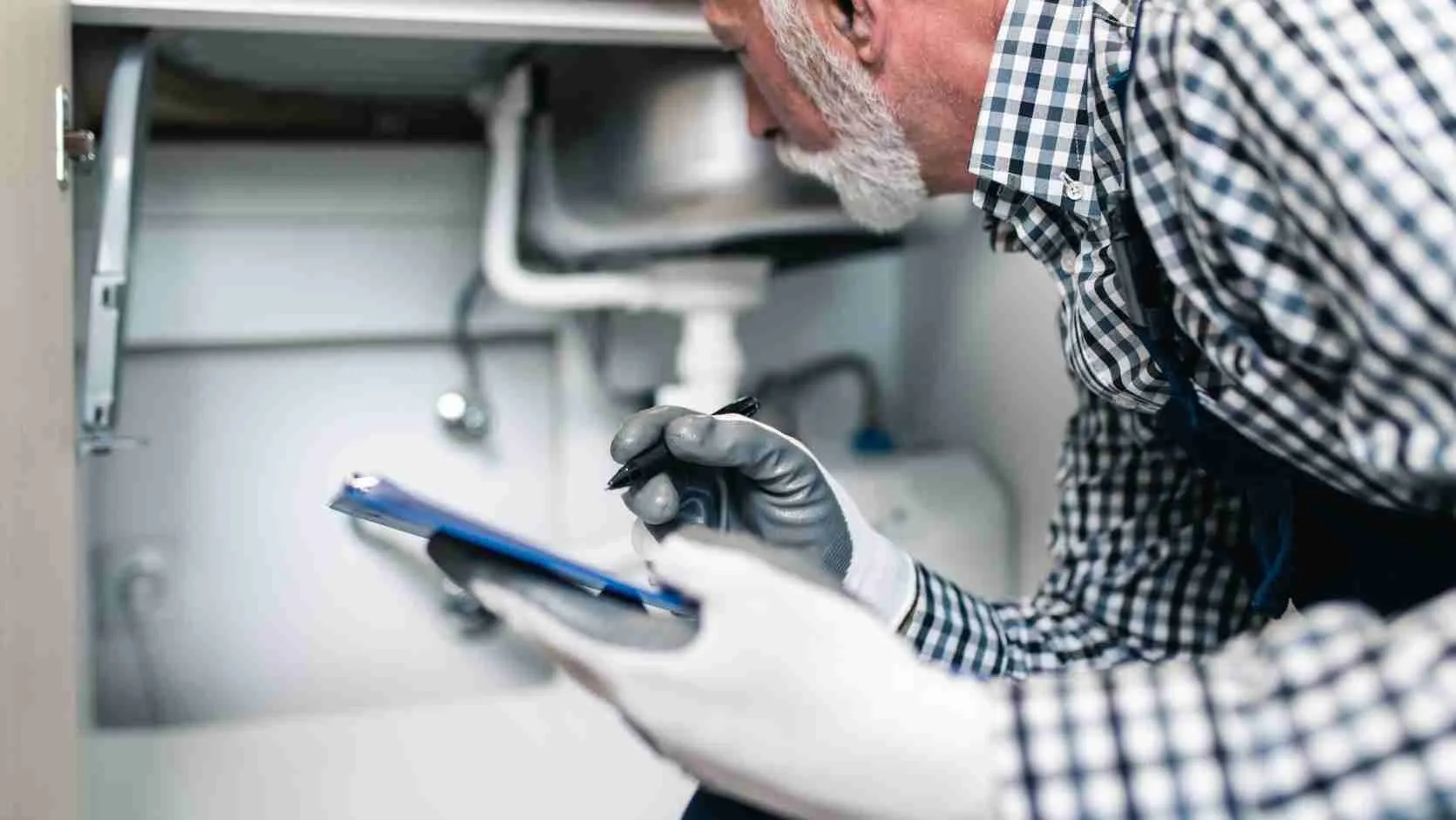
The focus is on assessing the condition of water-carrying systems and installations. This includes, in particular, installations and areas of the building that could be relevant to tap water damage, moisture damage, or consequential damage.
The following items, among others, are inspected and evaluated:
- Water-carrying systems and installations
- Pipe routing, connections, and joints
- Condition of the installation
- Signs of aging, wear, or defects
- Previous damage and recurring damage patterns
- Unused branches of the piping system
- Technical rooms and accessible areas of the system
- Abnormalities related to moisture, leaks, or corrosion
- Documentation status and observable maintenance status
- The inspection is conducted in a standardized manner by qualified, independent experts and is documented uniformly.
From Data Collection to AI-Powered Consulting
The key value proposition of ex:guard lies not only in the collection of building data, but also in its further utilization.
The collected data can optionally be used as the basis for AI-powered processes, for example for:
- Risk assessment of buildings
- Identification of recurring patterns
- Prioritization of preventive measures
- Derivation of modernization recommendations
- Support for underwriting processes
- Pre-structuring of claims processing
- Data reconciliation as part of claims processing
- Comparison of buildings within a portfolio
- Identification of properties requiring immediate action
- Creation of catalogs of measures
In this way, ex:guard combines practical building data collection with AI-supported prevention and operational decision support.
Process for ex:guard Data Collection
- Defining Objectives: We work together to determine what information is needed and what the objective is: prevention, risk assessment, status analysis, claims processing, collateral valuation, or action planning.#
- Selecting the Right Service: Depending on your needs, the service is implemented via ex:guard onsite, ex:guard remote, or ex:guard prevent. Combinations of these services are also possible.
- Structured Data Collection: Building, property, condition, and risk data are digitally captured on-site or via video inspection.
- Technical Validation: The collected data is technically reviewed, categorized, and prepared for further use.
- Recommendations and Derivation of Measures: Based on the data, recommendations, catalogs of measures, prevention guidelines, or next steps can be derived.
- AI-Supported Use: The structured data can be used by our clients for AI-supported consulting, assessment, and process support—from underwriting to claims processing.
Why EXCON?
EXCON combines many years of experience in risk prevention with digital data collection, expert assessment, and AI-powered consulting. The evolution of the Hauscheck into ex:guard creates a solution that not only documents building data but also makes it usable for prevention, assessment, and claims processing. Our clients benefit from:
- More than ten years of experience with the EXCON Hauscheck and building risk analyses
- Practical knowledge in the prevention of tap water damage
- Modular services for comprehensive flexibility
- Digital and structured building data collection
- Technical validation by qualified experts
- A usable database for AI-supported processes
- Concrete recommendations for prevention and action planning
- Improved customer service through digital inspections and consulting
- Support from underwriting through claims processing

Using Building Data for Risk Prevention and Automation
Whether you’re an insurance company, a lender, or a real estate firm: Knowing the condition of your buildings allows you to better assess risks, plan measures more effectively, and prevent damage more efficiently. EXCON ex:guard provides you with a reliable database of your building portfolio and real estate holdings. Talk to us about your specific use cases related to building data.

Frequently Asked Questions About ex:guard
What is ex:guard?
ex:guard is a modular service from EXCON for the structured collection, documentation, and use of building data. The solution supports prevention, risk assessment, action planning, claims processing, and AI-powered consulting processes.
How does ex:guard differ from the previous building inspection?
The previous “Hauscheck” focused on assessing the condition of residential buildings and preventing water damage from plumbing. ex:guard builds on this concept: The focus is now broader, encompassing the structured collection and use of building data—on-site, remote, and preventative.
What does “ex:guard onsite” mean?
“ex:guard onsite” refers to the collection of building data by experts on-site. During this process, relevant property, condition, and risk data are digitally recorded, documented, and professionally categorized.
What does ex:guard remote mean?
ex:guard remote is the digital collection of building data via video inspection. It is suitable for quick initial assessments, follow-up inspections, standardized property surveys, and recommendations without the need for a full on-site visit.
What does ex:guard prevent mean?
ex:guard prevent uses the collected building data to generate catalogs of measures and recommendations. The goal is to reduce risks, support prevention, and identify concrete next steps.
Who is ex:guard suitable for?
ex:guard is designed for insurance companies, banks, lenders, real estate firms, asset managers, property owners, and property managers who want to collect building data in a structured manner and use it to make better decisions.
Can ex:guard support claims processes?
Yes. The collected building data can support claims assessment, claims processing, and prevention. For insurance companies, this results in a better data foundation from underwriting through claims processing.